
- Products
- 123SCADA Platform
- Security
123SCADA Security Architecture
Mission Communications protects water and wastewater utility data with an enterprise-grade, defense-in-depth security architecture. From the RTU in the field to the 123SCADA web portal on your screen, every layer of the system is designed to prevent unauthorized access, protect data integrity, and ensure continuous availability.
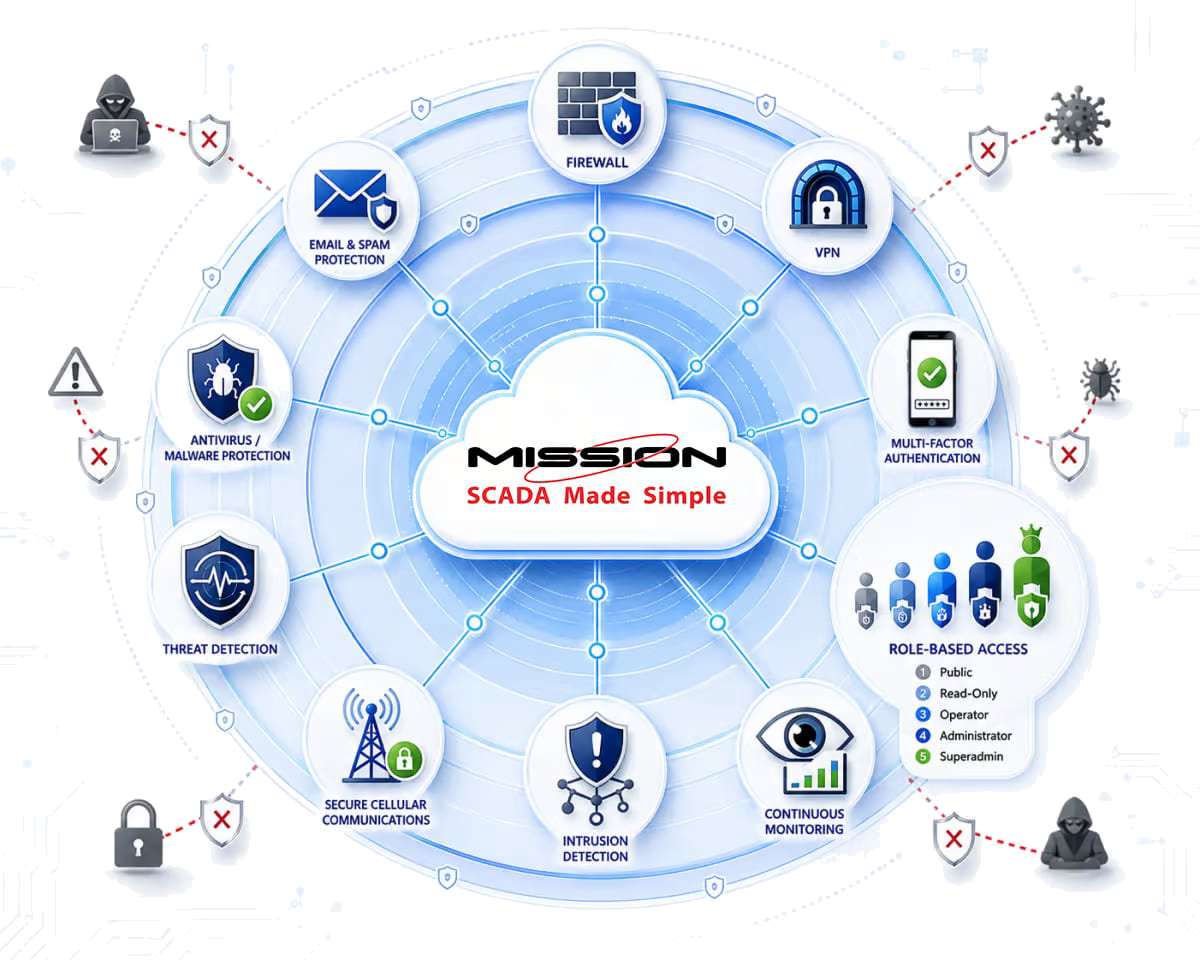
Defense in Depth Strategy
The Mission security architecture layers multiple independent protections so that no single point of failure can compromise the system. Firewalls are configured to minimize entry points and require high levels of validation.
Layered and complex network strategies secure the constant connections with cellular providers. Antivirus and antispam tools block malware at multiple vantage points. The overall system is monitored continuously, alerting Mission engineers to any anomaly immediately.
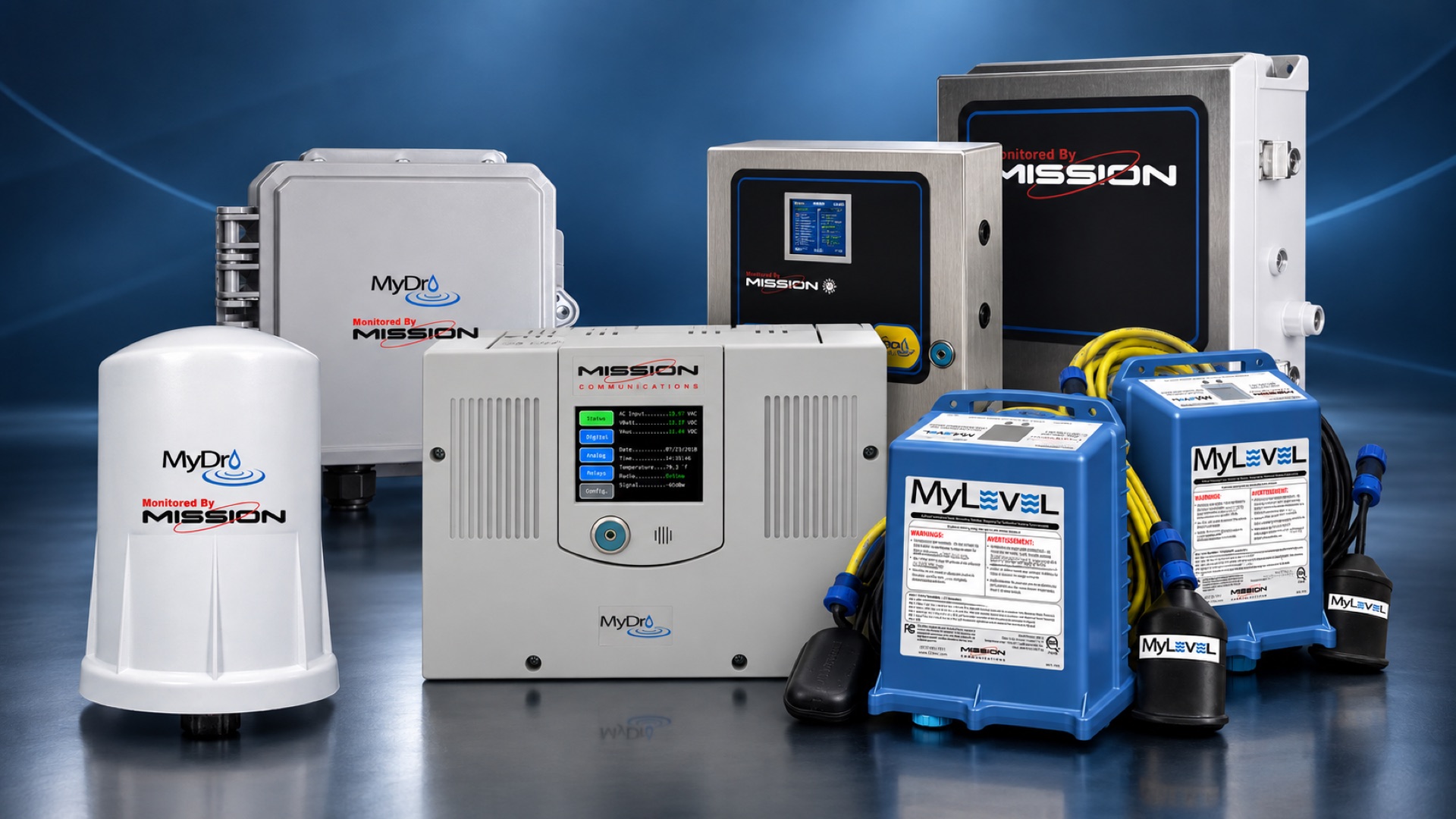
RTU-Level Security
Security starts at the field device. Mission RTUs are purpose-built hardware programmed to perform a specific set of tasks using very limited protocols. Mission RTUs have a minimal attack surface with no unnecessary services or open ports. Key RTU security features include:
- RTUs cannot accept an outside connection from an unknown device — the IP address is assigned within a private range that is not routable from the public internet
- Data is encrypted at two layers: once at the application layer and again at the wireless carrier level
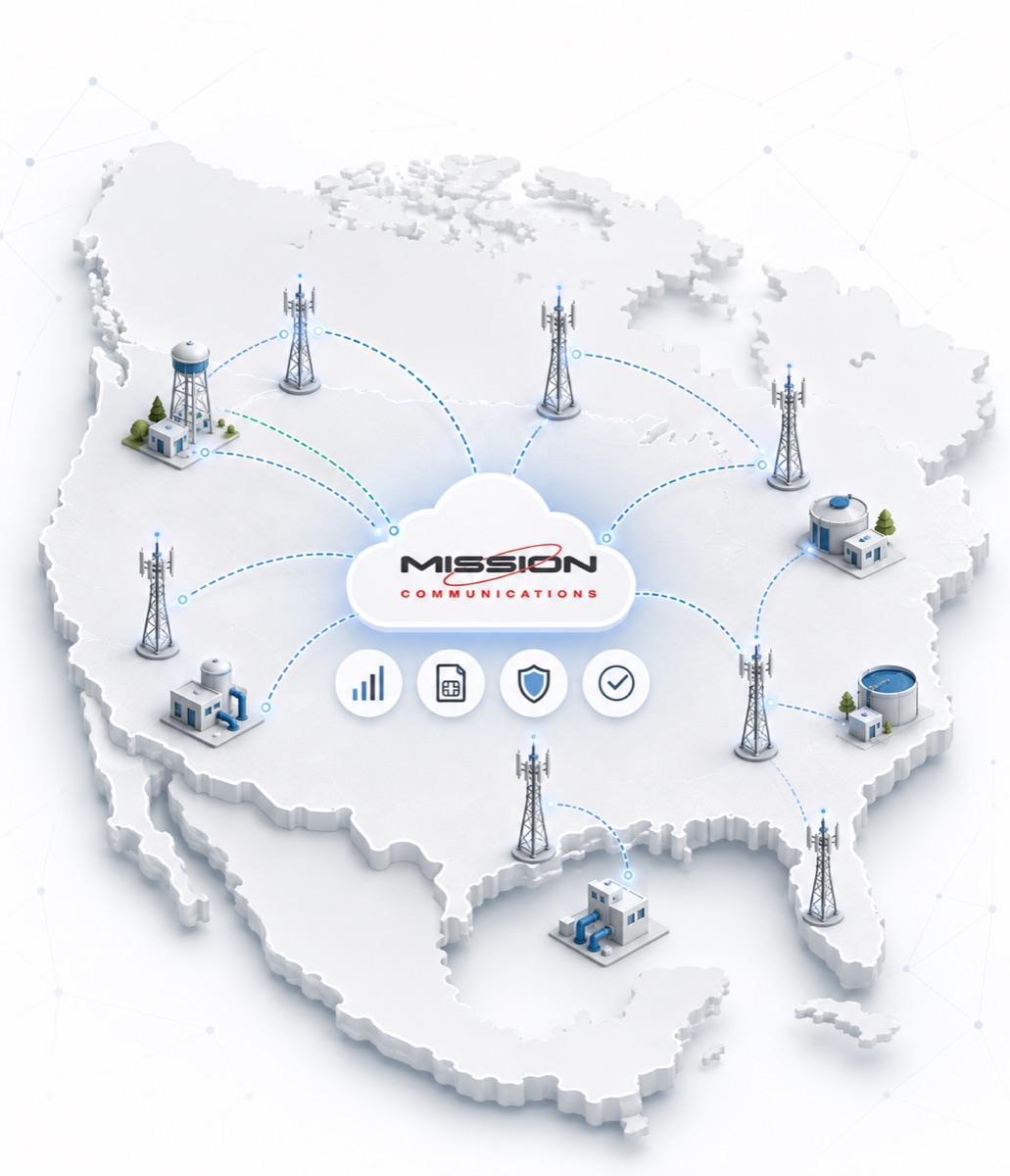
- Encrypted data travels over carrier private networks from cell tower to Mission servers
- Cellular communications reduce interception risk due to the complex modulations and spread spectrum nature of modern radio access technologies
Carrier-Grade Data Center
Mission servers are located in a high-security, carrier-grade data center near Atlanta, Georgia. The facility implements physical and environmental protections that exceed typical commercial hosting:
- Biometric scans required for entry; facility guarded 24 hours per day, seven days per week
- Access limited to a small number of Mission personnel
- Engineered to withstand a direct F-4 tornado strike; encased in concrete from substation to site
- Ample backup power generation capacity on site
- Redundant cooling and fire suppression systems
- Multiple peering connections across 14 carriers with redundant internal networks
- 24-hour network operations center for continuous monitoring
Web Portal Security
Once data is delivered to Mission servers, it is made available via a Transport Layer Security (TLS) encrypted website. The web portal enforces multiple layers of access protection:
- All activities are logged and monitored for anomalous behavior
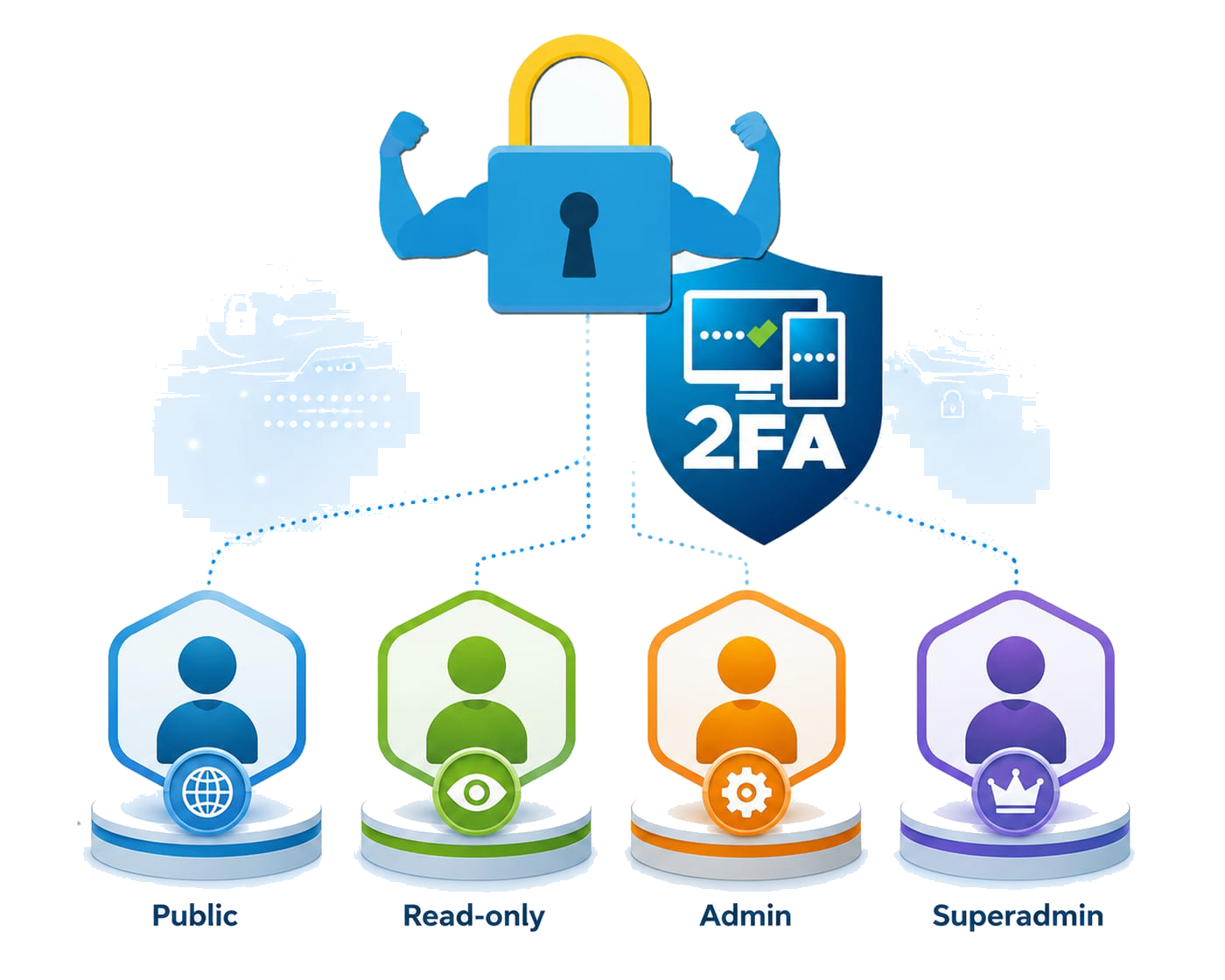
- Five role-based access levels (Public, Read-Only, Operator, Administrator, Superadmin) allow granular permission control
- Two-factor authentication (2FA) can be enforced organization-wide by a Superadmin
- Session management and timeout controls prevent unauthorized access from idle sessions
- Single Sign-On support available (depending on install base)
Who logged in, and what they did
Multi-Factor Authentication
123SCADA supports two-factor authentication (2FA) as an additional layer of protection beyond passwords. Organizations can enforce 2FA for all users at the Superadmin level, requiring verification beyond just a password for every login. This helps protect against compromised credentials, which remain one of the most common causes of security breaches in utility operations.
Real-Time Activity Logging
Every user action on the 123SCADA platform is tracked and recorded. Activity logs capture login events, configuration changes, command executions, report generation, and alarm acknowledgments. These logs support compliance auditing, incident investigation, and organizational accountability. User accounts and security practices are continuously evaluated and updated to ensure robust security posture.
Comparison with Alternatives
Cellular communications inherently provide security advantages over alternatives like private radio networks (PRN) and wireless Ethernet-based systems. Private radio systems are often unencrypted, and customers must implement their own encryption. Wireless Ethernet using WPA/WEP standards is notoriously easy to circumvent. With the Mission managed service model, RTU security is outsourced to the cellular provider and the security professionals at Mission, leaving utility staff free to focus on their core operations.
More About 123SCADA
123SCADA Platform
Dashboards, alarms, reports, mobile app, security, and OPC-UA integration — the cloud platform included with every Mission RTU.
Platform overviewFeatures
Live map and data views, customizable desktops, alarm management, remote commands, and unlimited users with five access levels.
Explore FeaturesMobile App
The full web portal on a phone or tablet, plus QR-code RTU configuration, geolocation, camera-to-support, and push alarms.
Explore Mobile AppReporting
Pump performance, analog and digital data, flow, compliance, engineering, and management reports, exported or scheduled to your inbox.
Explore ReportingFrequently Asked Questions
What security risks does a secure SCADA platform help address?
A secure SCADA platform helps address risks such as unauthorized access, weak visibility into system activity, and exposure of sensitive operational data. Built-in protection reduces disruption and supports safer system management.
Why does encryption matter in SCADA environments?
Encryption matters because it helps protect data while it moves between devices, users, and platforms. That reduces the chance of sensitive information being exposed during transmission.
How does cloud SCADA security protect remote access?
Cloud SCADA security supports safer remote access through controls such as authentication, access management, and protected communications. That helps users access systems remotely without weakening overall protection.
Questions for our security team?
Request a demo and bring your IT staff. We’ll walk through the architecture from the RTU to the portal and answer the questions your security review needs.