- Solutions
- Water Systems
- Distribution Pressure
Water Distribution System MonitoringSCADA for Pressure, Flow, and Leak Detection
Catch pressure drops that signal a main break within minutes, trend flows to identify non-revenue water, and prove pressure compliance without pulling spreadsheets together by hand.
Real-Time Visibility Across Every Pressure Zone
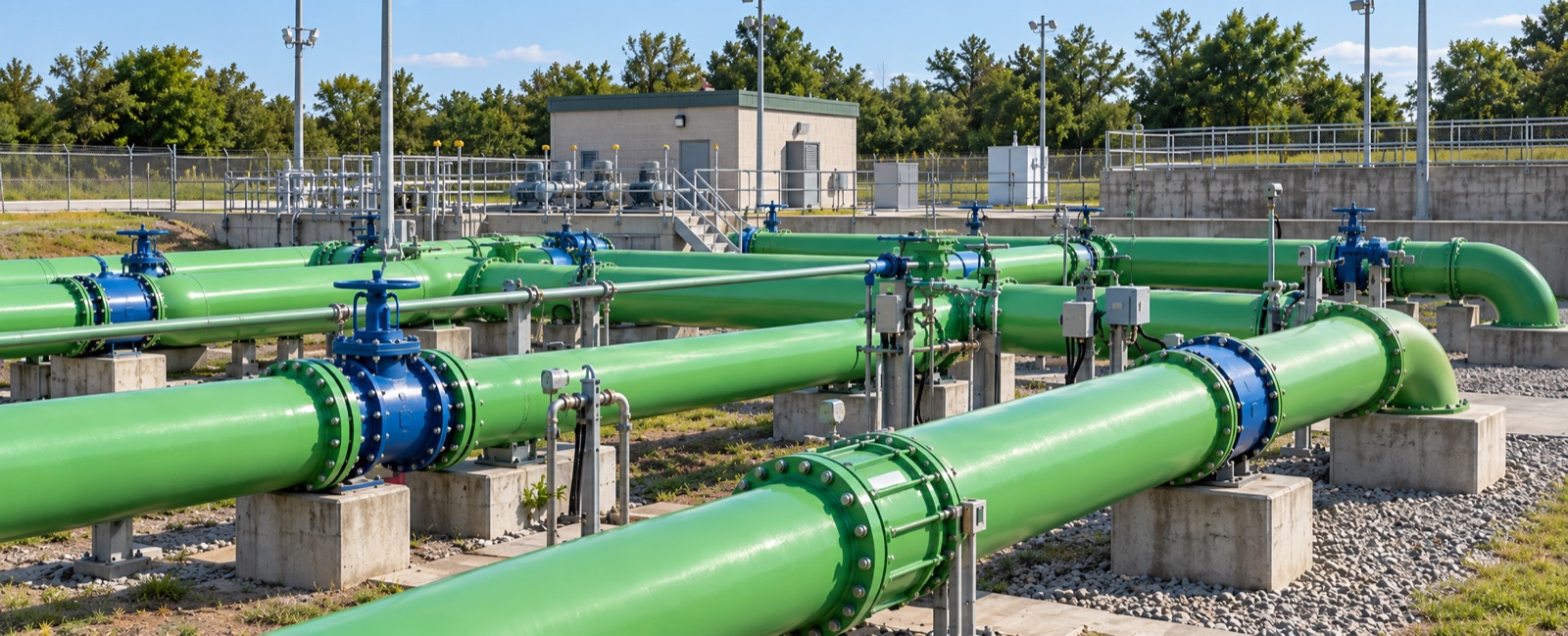
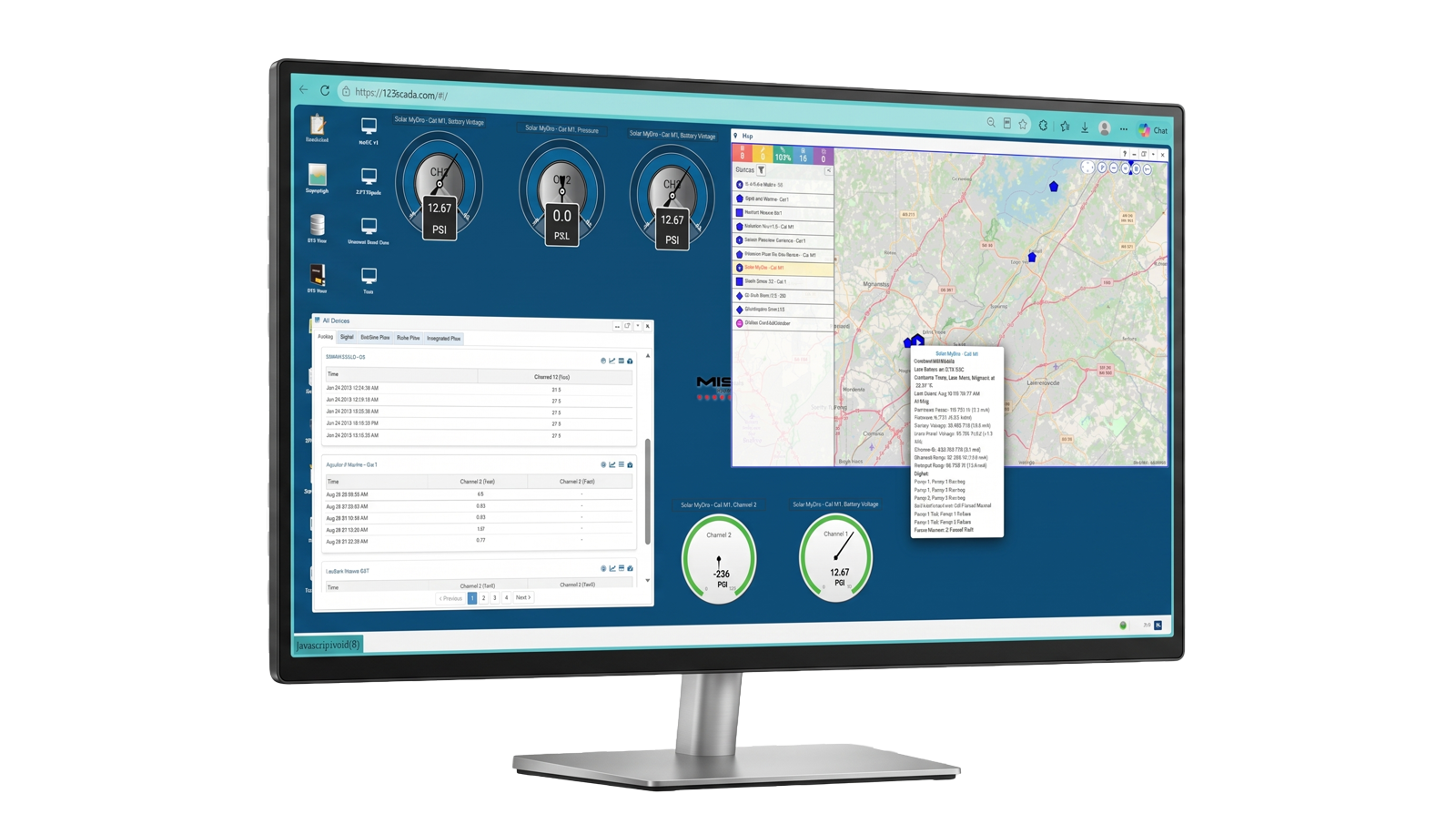
Water distribution system monitoring is the continuous measurement of pressures, flows, and pump conditions across a utility’s piping network, delivered through cellular RTUs and a cloud-hosted SCADA platform. Mission’s managed SCADA gives operators a single dashboard to watch every pressure zone, PRV station, and bulk meter in real time — without on-premise servers, private radio networks, or dedicated IT staff.
More than 6,100 water and wastewater utilities rely on Mission to monitor their infrastructure. On the distribution side, that means catching pressure drops that signal a main break within minutes, trending flows to identify non-revenue water, and proving pressure compliance for regulators without pulling spreadsheets together by hand.
Distribution network monitoring has historically been the hardest part of a water system to instrument because the assets are spread across miles of territory. Mission’s cellular RTUs remove that barrier — any site with cellular coverage can become a monitored node in hours.
What Mission Monitors on the Distribution Side
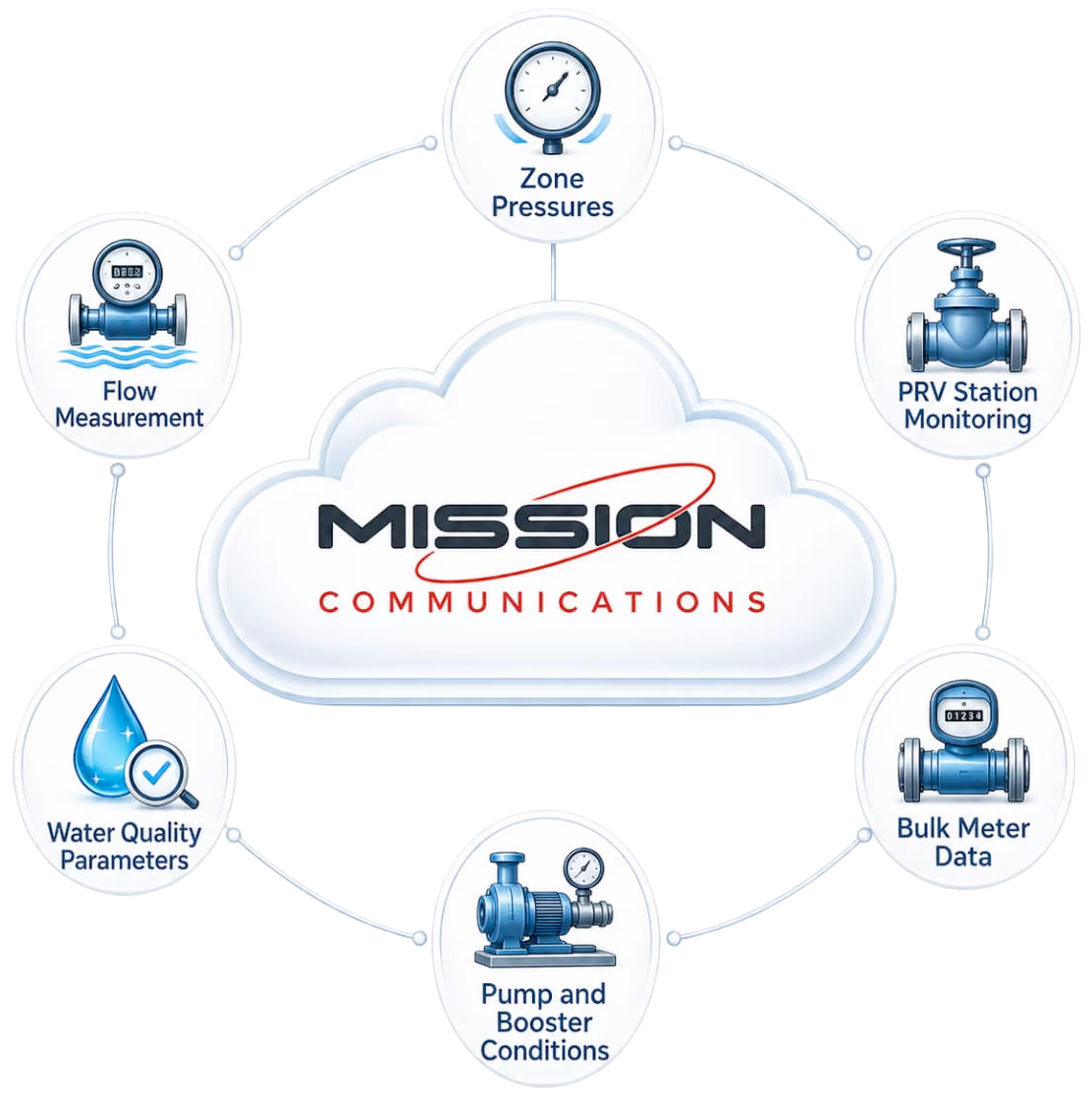
Distribution monitoring is not a single measurement — it is a set of connected data points that together tell operators whether the system is healthy. Mission’s platform captures every parameter that matters for pressure management, leak detection, and compliance reporting.
- Zone pressures — continuous pressure transducer readings at strategic points across each pressure zone, with configurable high and low alarm thresholds.
- Flow measurement — integration with existing magnetic, turbine, or ultrasonic flow meters to track volumetric flow and minimum night flow.
- PRV station monitoring — upstream and downstream pressure plus valve position for pressure-reducing valves, so operators know the moment a PRV fails or drifts out of set-point.
- Bulk meter data — master meter and district metered area (DMA) readings for loss-control studies and wholesale billing.
- Pump and booster conditions — runtime, starts, suction, and discharge pressures for pumps feeding the distribution network.
- Water quality parameters — chlorine residual, pH, and turbidity where probes are installed.
Leak and Main Break Detection
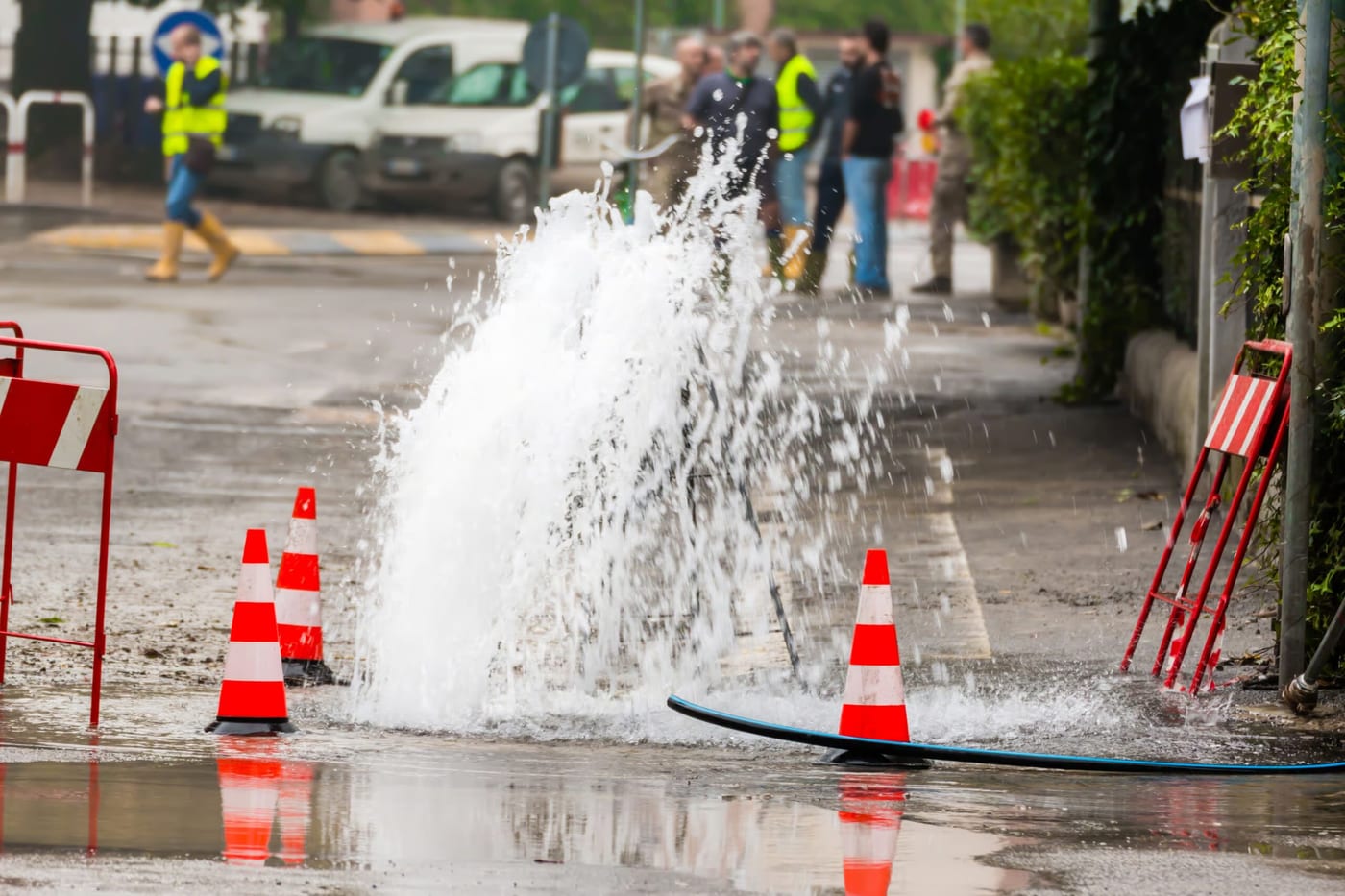
An unnoticed main break can release hundreds of thousands of gallons of treated water and damage roadways, private property, and nearby infrastructure. Mission’s pressure monitoring provides the earliest possible warning: a sudden pressure drop at any monitored point triggers an alarm dispatched via phone, text, or email within less than a minute.
When combined with flow monitoring at a DMA inlet, operators can also track minimum night flow — the overnight baseline that exposes slow, chronic leaks which pressure alarms alone may miss. Mission’s historical trending tools make it easy to compare this week’s night flow to last week’s and to catch gradual upward drift before it becomes visible losses.
For utilities under regulatory pressure to reduce non-revenue water, the combination of real-time alarms and historical flow trending provides the data backbone for a defensible loss-control program.
Pressure Zone Management
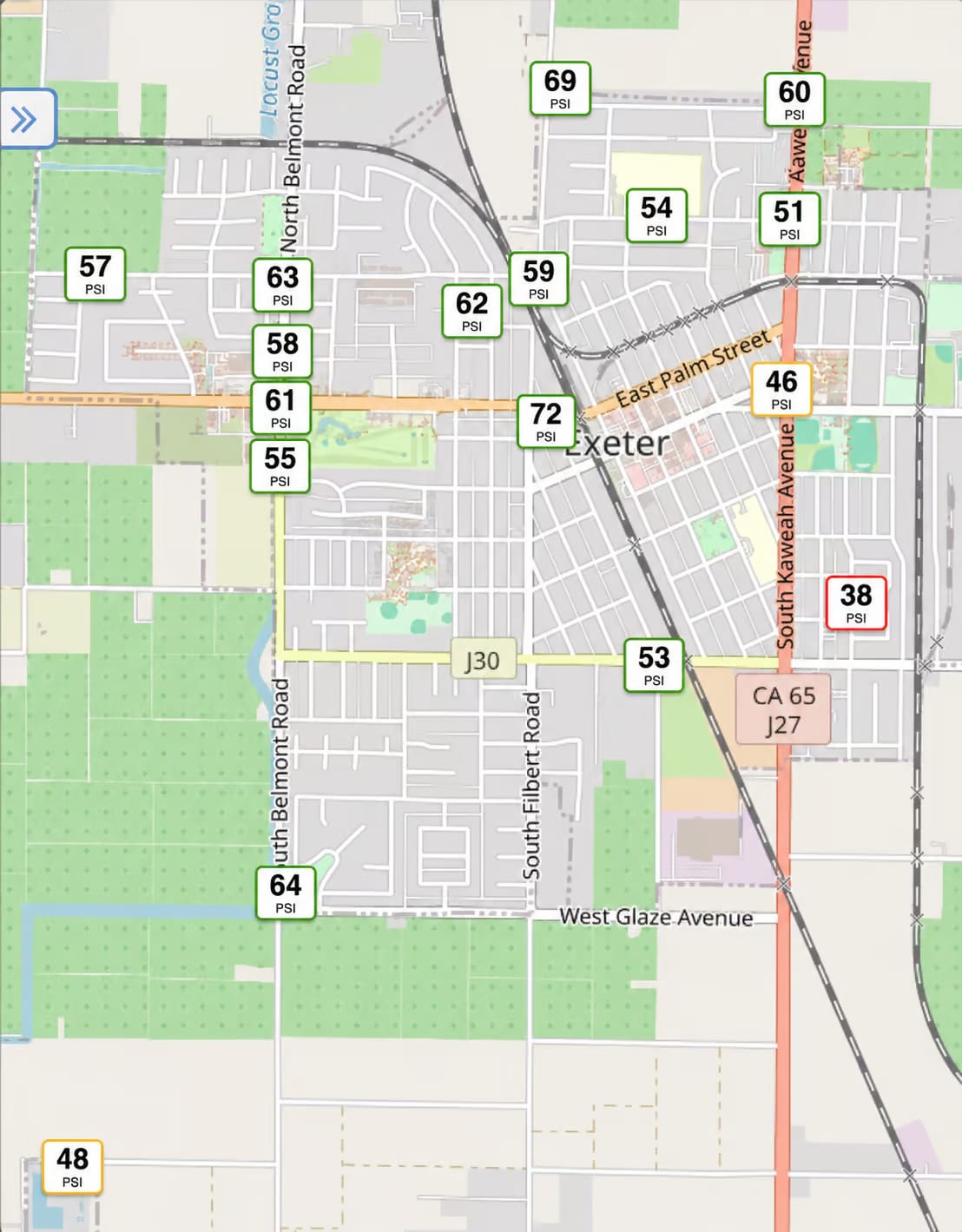
Most distribution networks are divided into pressure zones separated by PRVs, pump stations, or closed valves. Each zone has its own hydraulic profile, and a single misconfigured valve can send pressures out of compliance across an entire neighborhood.
Mission’s platform tracks each zone independently, with separate alarm thresholds and reports per zone. Operators can confirm that every PRV is holding its set-point, that overnight pressures never exceed permit limits, and that peak-hour pressures stay above minimum service levels — all from the same dashboard.
Historical zone-pressure reports provide the documentation regulators increasingly expect as part of pressure management planning and asset management submissions.
Reporting for Compliance and Loss Control
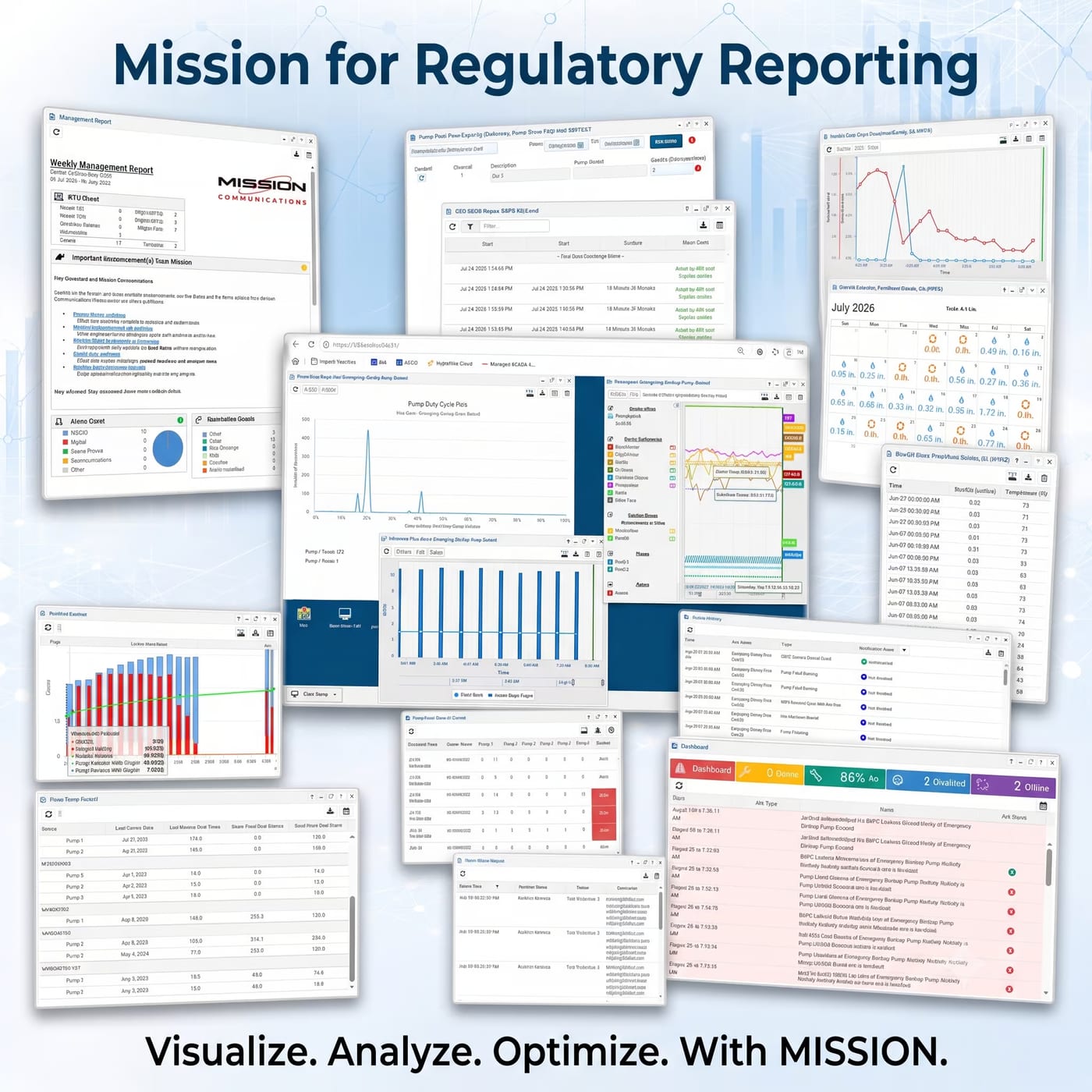
Mission’s 123SCADA platform retains every data point from the date of RTU installation, giving utilities a complete historical record for compliance reporting, water audits, and rate case documentation.
Pre-built reports cover pressure compliance, minimum night flow, pump runtime, and PRV performance. All data exports cleanly to spreadsheets or flows directly into plant SCADA systems via OPC-UA integration when a unified view is needed.
What You Will Need
Any site with cellular coverage can become a monitored node in hours. All RTUs include cellular data charges in the annual subscription—there are no separate data overage fees or early termination penalties.
MyDro 850
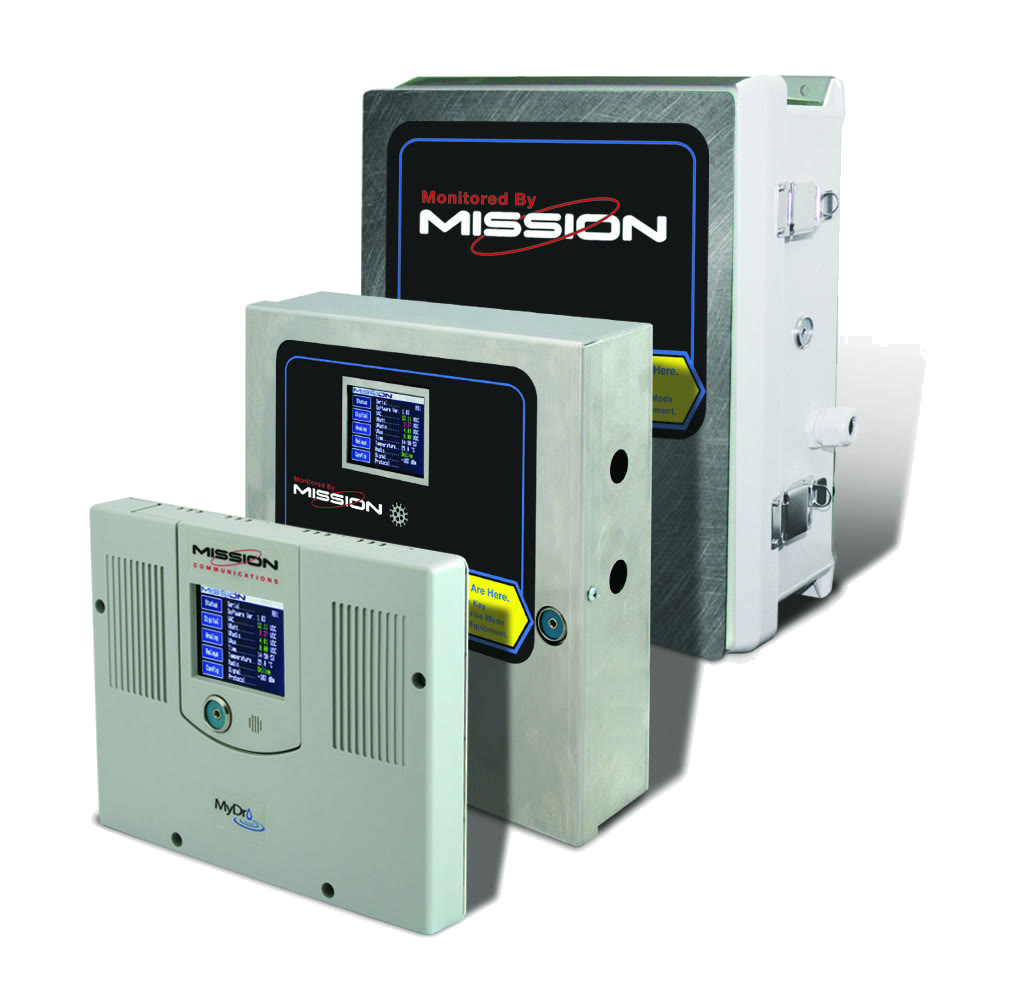
The full-featured, line-powered RTU with the most extensive I/O capacity. Ideal for larger stations requiring multiple analog and digital inputs, relay outputs for remote control, and expansion module support.
View MyDro 850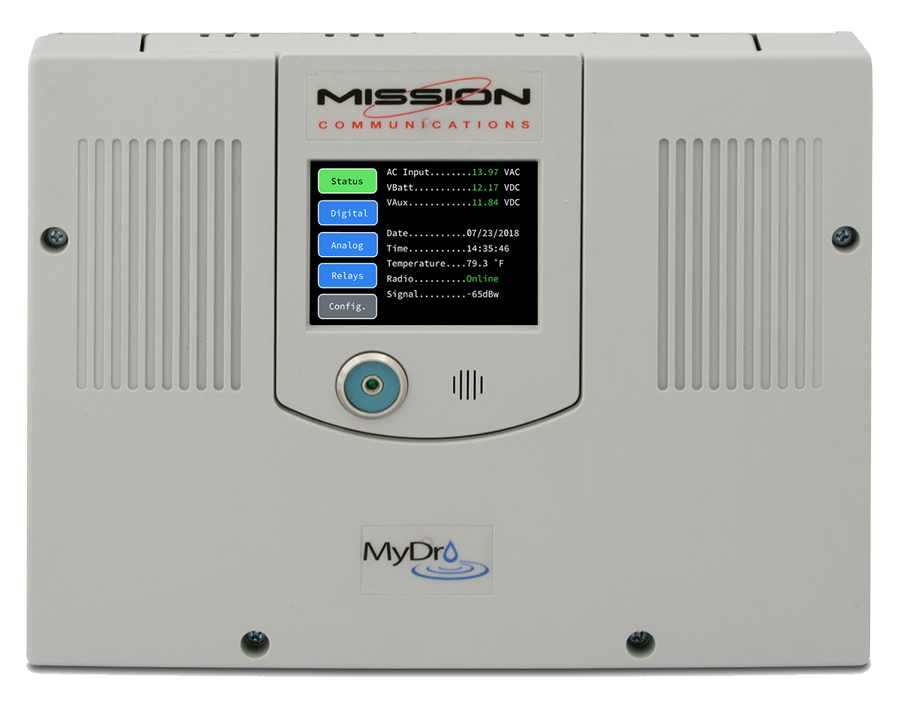
MyDro 150
A compact, line-powered RTU that delivers core monitoring and alarm capabilities in a smaller form factor. Supports emergency backup pump control and is upgradeable to the M850’s feature set.
View MyDro 150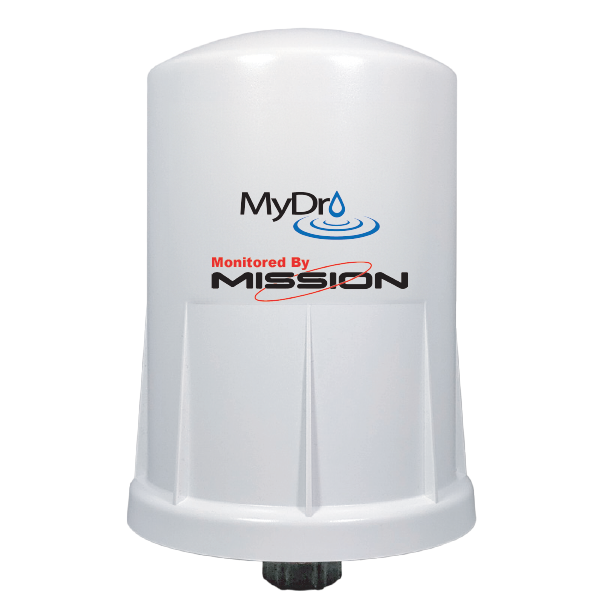
MyDro 50
A battery-powered RTU for small stations without reliable power, using solar charging and ultra-low-power cellular communication for years of maintenance-free operation.
View MyDro 50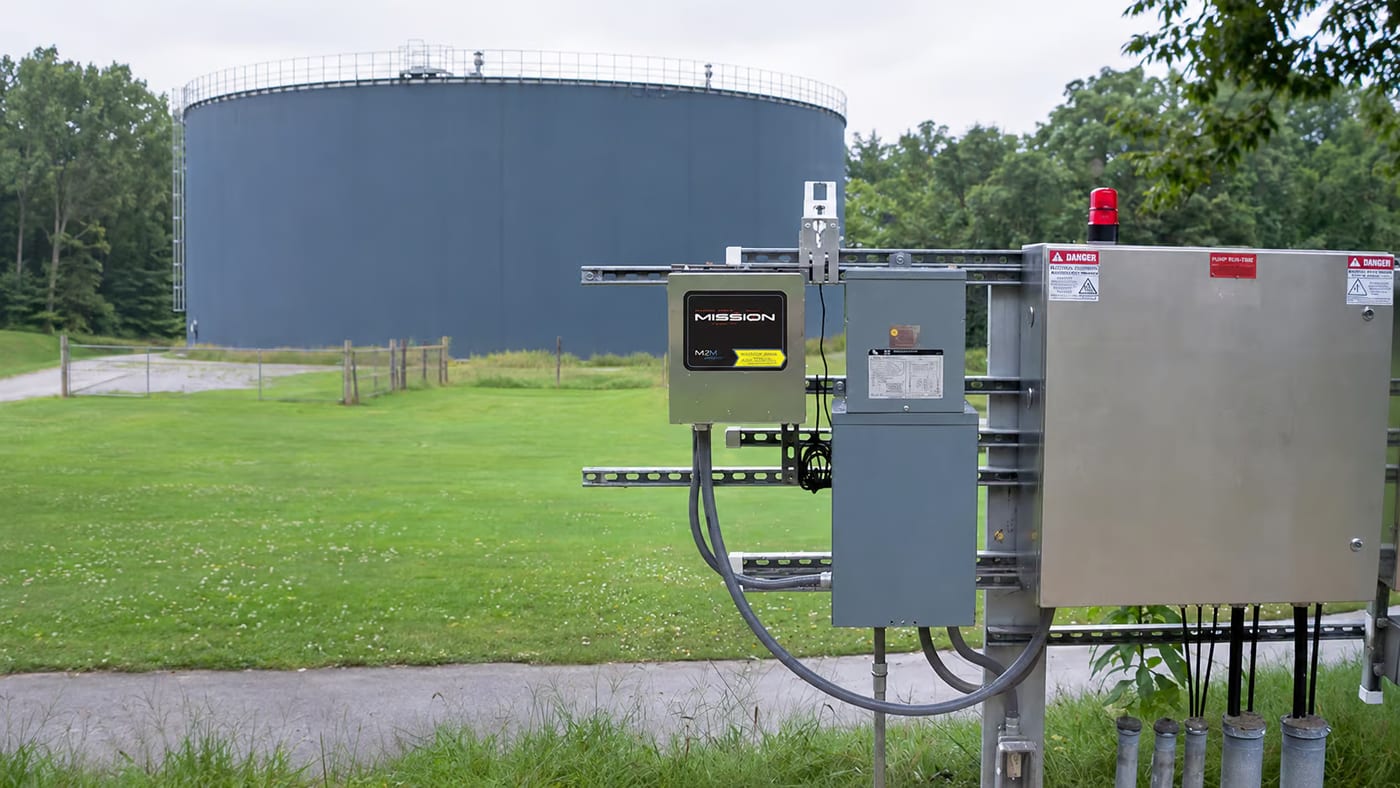
Tanks & Wells
Automated tank level control: the well pump starts when the tank drops and stops when it fills. No operator intervention.
Explore Tanks & Wells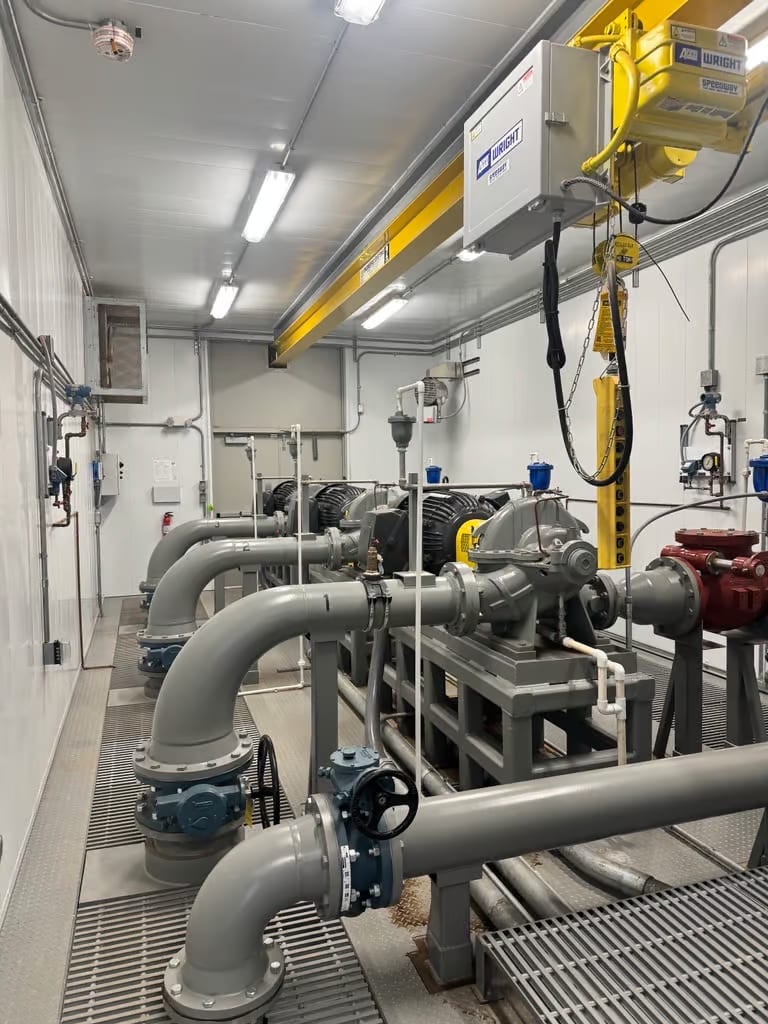
Booster / Pump Stations
Suction and discharge pressure, pump status and runtime, power, and PRVs at every unmanned booster.
Explore Booster / Pump StationsSee all Water Systems solutions
Every application Mission monitors and controls, with the alarms, reports, and hardware for each.
View all Water SystemsFrequently Asked Questions
Why is water distribution monitoring important for utilities?
Water distribution monitoring helps utilities understand what is happening across their network in real time. It supports faster detection of pressure problems, leaks, and flow changes, which helps improve service reliability and reduce water loss.
How do utilities monitor pressure issues across a distribution network?
Utilities monitor pressure issues by placing sensors at key points in the network and sending that data into a SCADA platform. Operators can then track pressure conditions continuously and respond faster when abnormal readings appear.
What are the benefits of monitoring distributed infrastructure remotely?
Remote monitoring helps utilities manage large or spread-out systems more efficiently. Operators can see multiple sites from one interface, identify issues sooner, and avoid unnecessary travel while maintaining better visibility across the network.
Get Started with Distribution Monitoring
Whether you need to instrument a handful of critical pressure points or build a system-wide DMA program, Mission’s managed SCADA scales to fit. Deployment takes hours, not months, and every site runs on the same predictable annual subscription. Call 877.993.1911 or request a demo by clicking below.